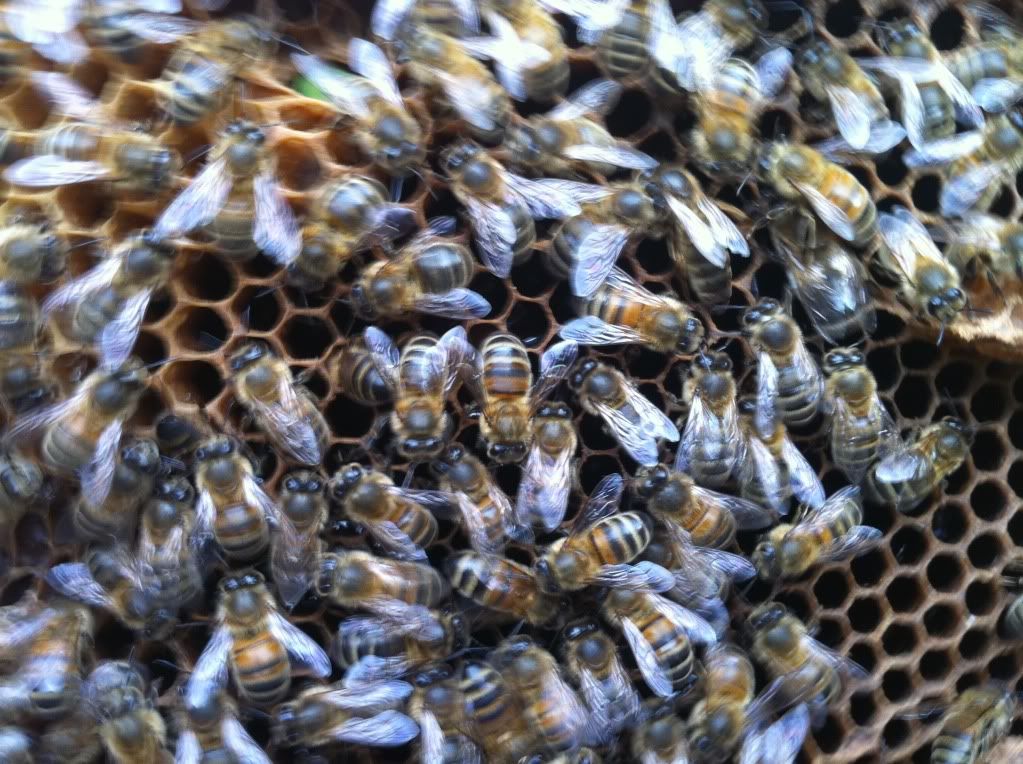
I had read about candle making, but had thought it would be really hard to do. But let me tell you this, it is the easy thing in the world to do.
First of all we cut the wax comb out of the frames, and popped the frames in the sink for a good wash and disinfect.
Then we needed to take the wax and break it up in to bits. The original foundation was wired and therefore we needed to take the metal wire out of the wax before it could be heated.
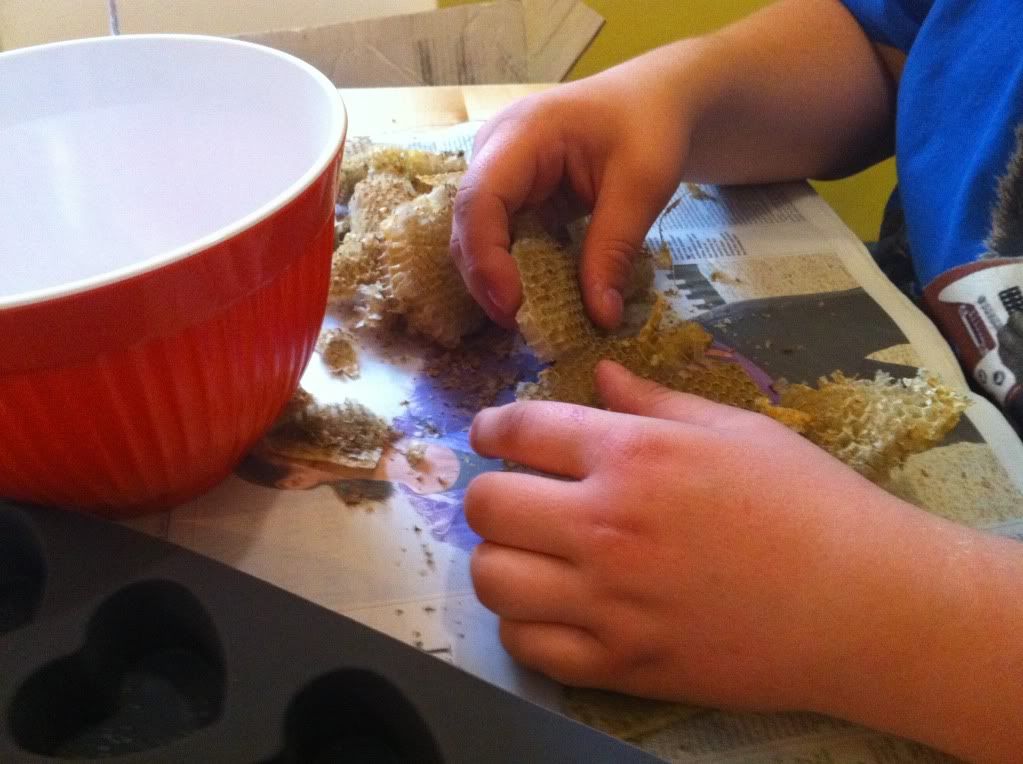
We broke the way in to small square pieces which were about an inch in size. We then put them in to a jug. The beekeeper at Gardener's World told us to use a microwave safe plastic bowl, but we didn't have any of those so a glass jug had to suffice...
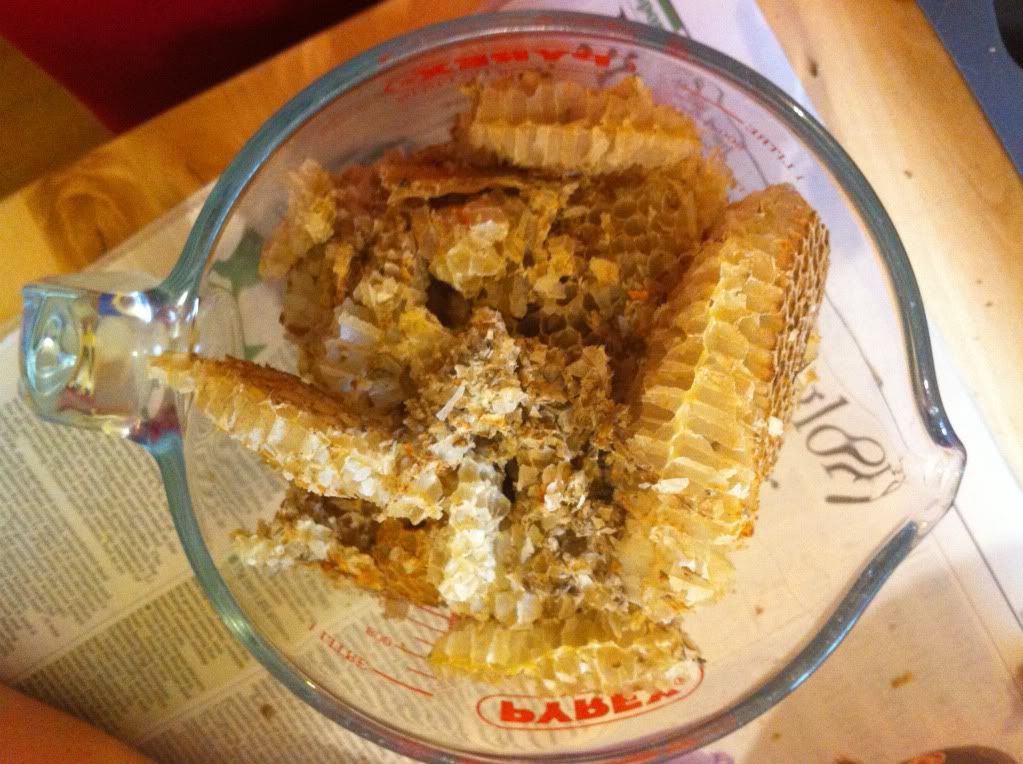
It's all then so easy.
We put the wax in to the microwave for 30 second sessions at a time. Each time we would give the wax a prod (early stages) and when it was starting to melt we gave it a stir. The liquid was black, and I started to envisage the worst candles ever created, and then have to face the humility on here.
You can make wax sheets to roll up in to old fashioned candles, but the easy way to do it is to pour the liquid in to those rubber cake moulds. We had some heart shaped cake moulds to use.
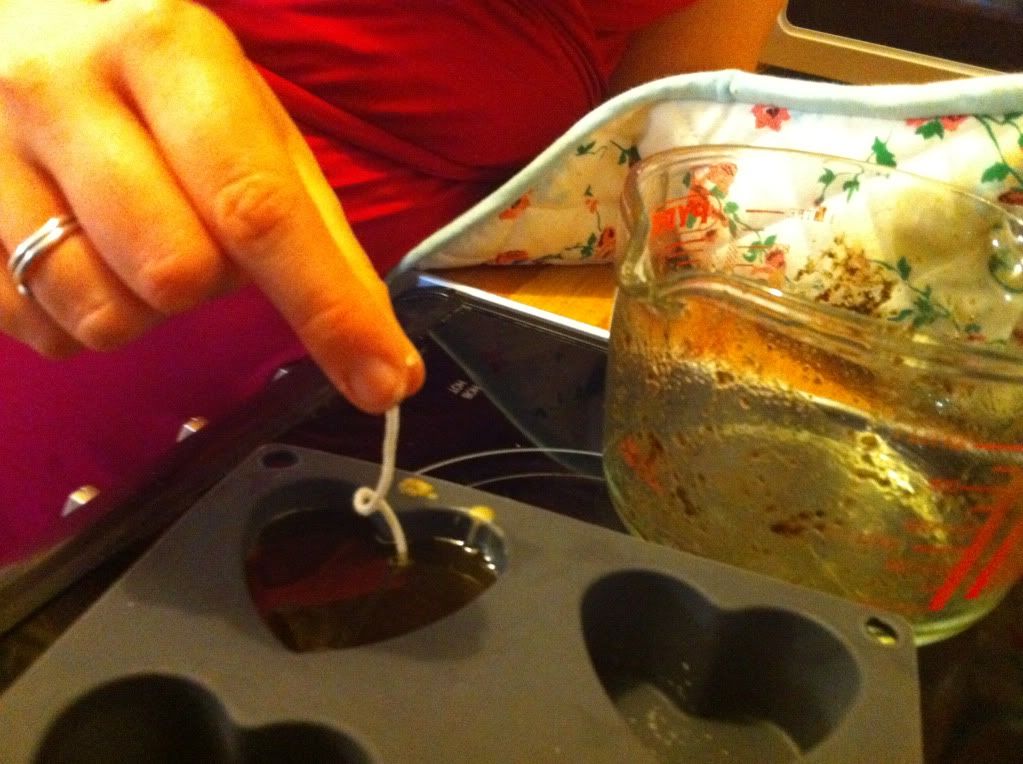
For the first one we cut the wick down to size and then I dangled the wick in to the mould whilst Amy poured the mixture in, and we reversed roles for the second attempt. I then stood like a lemon holding the wick in place until it began to set slightly.
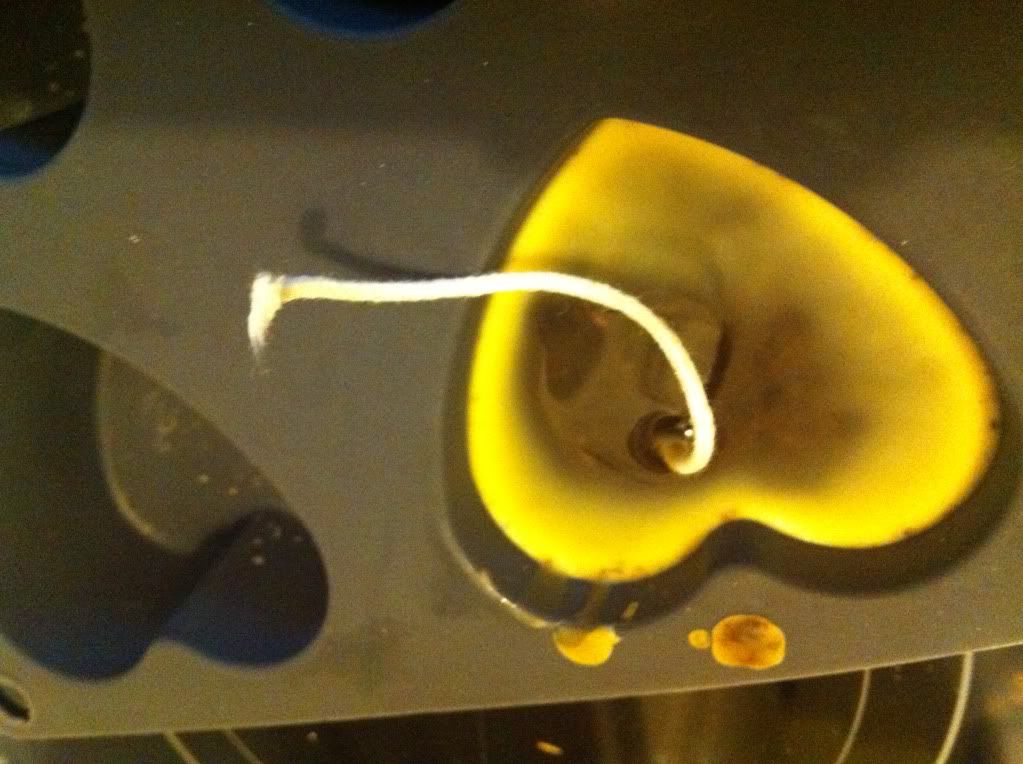
We filled two moulds with our 2 frames worth of wax. We did think we would get a couple more with so much wax, but I suppose that it is hollow and looked like there was more than there really was. Never mind.
When both moulds were filled and beggining to set, we popped them in to the fridge to speed up the process.
It then came to the time to remove them from the moulds and we were pleasantly surprised. With the frame that used to contain stores of honey, the candle had set to a georgeous deep honey colour. Whereas the brood wax candle was much darker and almost an olive oil colour on the sides and at the bottom.
The only problem we encountered was that some debri and bits that weren't removed from the wax seemed to burn in the microwave and sank to the bottom of the melted wax, so the bottoms of the candles is black. However, this does not bother us at all. But in the future we may use a more precise filtration/debri removal technique.
Amy is so thrilled with the end product that she says that we can never, ever burn them. Which of course slightly defeats the object of the whole task. They are nicely sat on the bedroom windowsil now and are nice decorative ornaments.

Has anybody else tried making their own candles? We would love to hear about what you found good/bad and easy/hard.
Thanks everyone for reading, if you have access to your own wax, or know someone who keeps bees then this is definately worth a try. Good luck if you do try it!
I hope you have a nice weekend!
Martin